
Why Buffer Time Creates Stress-Free Wedding Photos
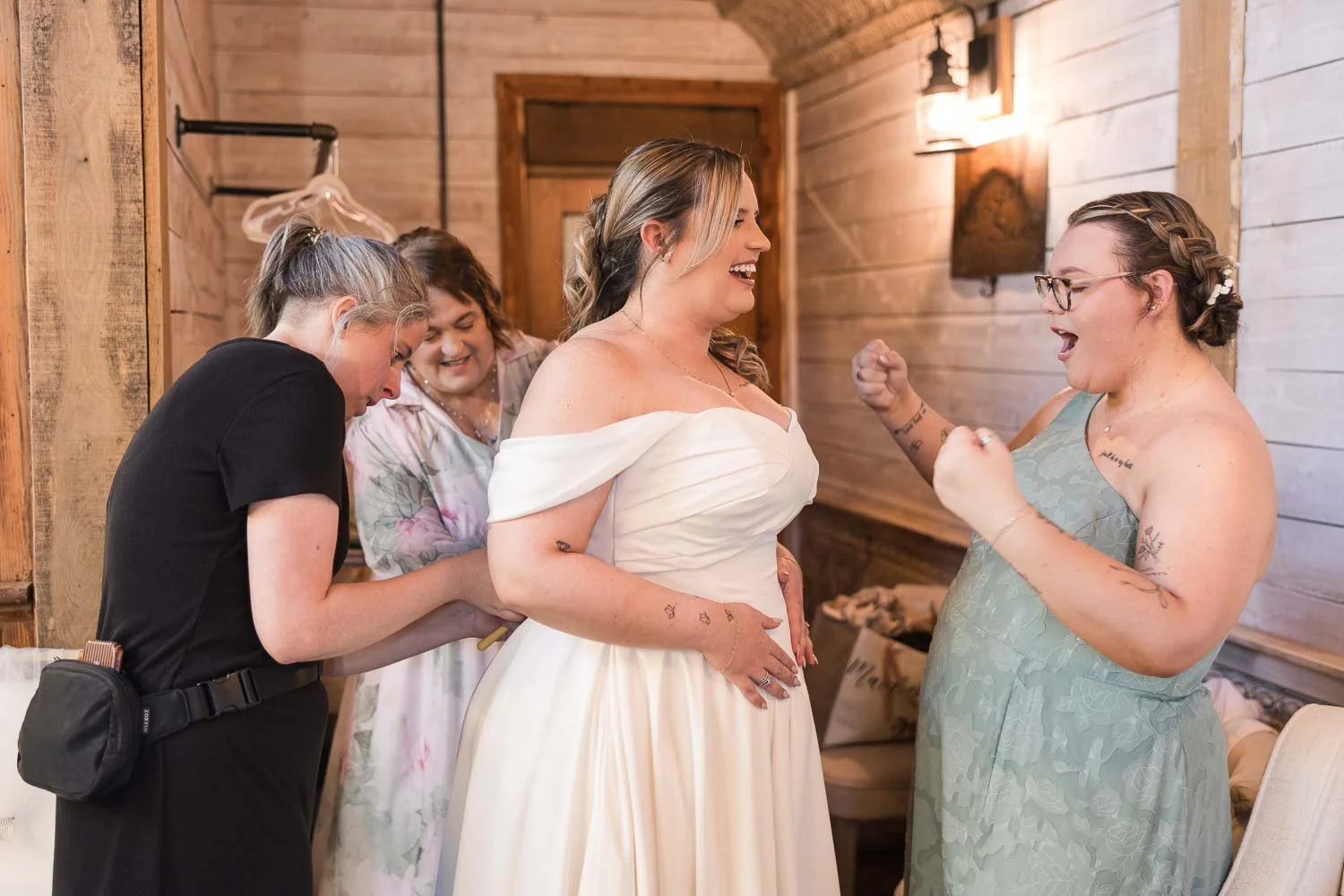
There is one thing I can say with absolute confidence after years in the wedding industry: something will go wrong on your wedding day. Not usually in a dramatic, day-ruining way - but a zipper sticks, hair runs late, a boutonniere goes missing, someone can’t find their shoes. It happens every single time. And honestly? That’s normal. The difference between a wedding day that feels calm and one that feels rushed almost always comes down to buffer time.
What Buffer Time Actually Means
Buffer time is extra breathing room built into your timeline - not because you expect things to go wrong, but because real life happens It’s the 10–15 minutes between getting ready photos and a first look. The cushion between portraits and the ceremony. The flexibility that keeps one small delay from turning into a domino effect Without buffer time, every tiny hiccup feels urgent. With it, most issues barely register.
Why Buffer Time Matters So Much for Photos
From a photography standpoint, buffer time does three big things:
First, it allows moments to unfold naturally. When we’re not racing the clock, reactions feel more genuine, movements are slower, and photos feel more relaxed.
Second, it protects your most important photos. If everything is scheduled back-to-back with no margin, the first thing that gets rushed (or cut entirely) is often couples’ portraits - which is the one part of the day you can’t redo later.
Third, it keeps you calm. Stress shows up in photos more than most people realize. When you’re not constantly worried about being behind, your body language softens, your expressions relax, and that translates directly into your images.
Buffer Time Isn’t Wasted Time
This is something I hear a lot: “We don’t want too much downtime.”
But buffer time isn’t standing around doing nothing. It’s:
Time to touch up makeup after emotional moments
A chance to grab a sip of water or take a breath
Space for candid interactions to happen naturally
Some of the most meaningful photos of the day happen because there was room for them.
Where Buffer Time Matters Most
While buffer time is helpful everywhere, it’s especially important around:
Getting ready → first looks
Portraits before the ceremony
Family photos after the ceremony
Any transition that requires travel or moving a large group
These are the moments most likely to run long - and the moments you don’t want to feel rushed.
A Calm Timeline = Better Photos
A well-built timeline doesn’t just keep the day organized - it creates a better experience overall. When there’s margin built in, the day flows more smoothly, emotions feel lighter, and your photos reflect that calm energy. Buffer time isn’t about planning for failure. It’s about giving your wedding day the grace to be human.